
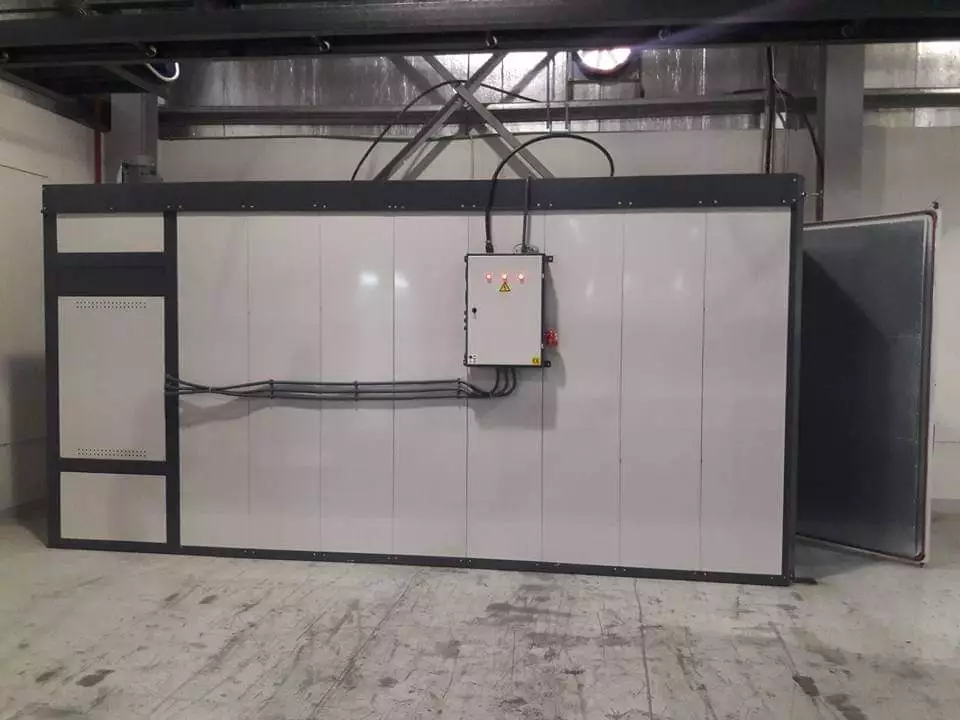
Factors to Assess When Selecting a Paint Curing Oven for Heavy Metal Parts

Heavy metal components behave differently during the curing process, and the equipment chosen for them must match their demanding requirements. Many operations underestimate just how much weight, thickness, and mass influence the performance of a paint curing oven. Understanding these factors helps ensure coatings bond correctly, stay durable, and meet the finish standards expected from large industrial parts.
Sufficient Thermal Mass to Heat Dense Loads Effectively
Dense steel and cast components absorb heat slowly, so the industrial curing oven must maintain enough thermal mass to warm heavy loads without losing temperature stability. If the chamber loses too much heat each time a fresh load enters, the cure cycle becomes inconsistent, leading to under-cured coatings. Proper thermal capacity ensures the oven rebounds quickly while keeping surfaces at the required temperature. The challenge becomes even greater with large batches placed inside a paint curing oven at once. Thick metals demand long heat-up times, and the equipment must supply steady energy output so the entire part reaches its proper cure point. Without the right thermal mass, the process stalls and affects finish strength.
Robust Conveyor Capacity for Extremely Heavy Components
Heavy metal parts may push the limits of a continuous system, so a conveyor must support weight without sagging or slowing down. Industrial curing ovens that handle these loads need reinforced frames and high-torque motors. If the conveyor cannot carry the mass reliably, production efficiency drops and safety becomes an issue.
Different facilities handle oversized welded frames, cast housings, or structural steel, and each requires a conveyor capable of long-term mechanical endurance. Strong drive assemblies and heat-resistant rollers help prevent breakdowns that interrupt curing cycles.
Oven Size Needs to Accommodate Large, Bulky Item Dimensions
Oversized parts require generous interior space so heat can circulate freely around every surface. If a paint curing oven is too tight, airflow becomes restricted and parts cure unevenly. Large industrial curing ovens often include extended chambers so bulky pieces don’t block circulation paths.
Facilities working with wide frames or tall metal structures benefit from extra clearance that reduces the risk of heat shadows. This space also helps operators load and unload safely without scraping or overheating edges.
Heat Recovery Systems Critical for Energy Efficiency with Heavy Loads
Heat recovery technology becomes important once thick metal enters the equation because the oven must replenish lost energy repeatedly. These systems recapture warm exhaust air and redirect it into the chamber, reducing fuel consumption. With heavy loads, this efficiency keeps operating costs manageable while maintaining stable temperatures.
Reducing energy waste also means the oven maintains consistent chamber heat even during rapid throughput. By helping retain warmth before it escapes, heat recovery plays a major role in long-term operational savings.
Ability to Manage the Significant Temperature Lag in Thick Metal
Thick metal warms from the outside inward, and this creates temperature lag that must be accounted for during curing. Surface temperatures may rise quickly, while the core remains cooler for much longer. A paint curing oven built for heavy parts controls this gap by maintaining steady air temperatures long enough for the entire part to reach uniform heat.
Rushed cycles produce soft spots or uneven adhesion that show up after installation or during field use. Correct timing ensures the coating bonds correctly with the full mass of the material, not just the outer layer.
Powerful Air Circulation to Ensure Uniform Heat Penetration
Air movement must be strong enough to drive heat deep into large parts through convection. Weak airflow creates cold zones, especially around corners, cavities, and mounting brackets. Industrial curing ovens designed for heavy metal components typically use high-volume fans flow paths.
Each oven may also rely on directional air patterns that push heat across surfaces evenly. This helps prevent under-cured regions that could compromise durability once the component is placed under stress.
Required Peak Metal Temperature (PMT) Consistency for Quality
Peak Metal Temperature determines whether coatings reach their correct hardness, adhesion, and durability. With heavy parts, PMT consistency becomes one of the most important factors during curing. If the metal varies by more than a few degrees from section to section, the finish may weaken over time.
Achieving PMT alignment means the oven must hold tight temperature ranges and allow enough dwell time. This ensures every inch of the component meets the coating manufacturer’s specifications for performance.
Batch Versus Continuous Flow Based on Production Logistics
Choosing between batch ovens and continuous-flow systems depends on how a facility manages its workflow. Batch ovens work well when handling large weldments, irregular shapes, or low-volume production. Continuous systems support higher throughput as long as parts fit the conveyor and arrive at consistent intervals.
Each method affects heat retention, curing predictability, and overall efficiency. Companies weighing both options often compare space, weight limits, part size, and future production expansion. For operations needing equipment that aligns with these requirements, Reliant Finishing Systems’ industrial curing ovens are capable of supporting the demands of heavy metal processing.


