

Key Takeaways
- Choose a truck around routine jobs, not its highest advertised towing number.
- Payload matters just as much as towing capacity.
- Cab, bed, drivetrain, and powertrain choices affect daily usefulness.
- Texas drivers should account for long highway distances, heat, rough work sites, and varied weather.
- Check the labels and equipment on the exact truck before buying.
Buying a pickup in Texas means choosing for more than just a Saturday hardware store run. One truck may need to handle a Houston commute, a jobsite outside Austin, a family drive across the Hill Country, or a boat trip toward the Gulf Coast. Browsing a Texas car trader can reveal plenty of choices, but the right one is the truck that fits the work and travel you actually do. Start with capability, then consider comfort, size, and ownership costs. A pickup that looks perfect on a dealer lot can become frustrating if it will not fit in your garage, cannot carry your regular equipment, or feels oversized in downtown Dallas parking structures.
Start With a Real-World Use List
Write down what the truck must do during a normal month. Include commuting, carrying tools, hauling mulch or fencing supplies, moving ATVs, towing a camper, transporting children, and driving on ranch roads or wet launch ramps. Be honest about frequency. A truck used to tow a loaded trailer every weekend needs a different setup than one that hauls a utility trailer twice a year.
A Quick Texas Truck Worksheet
- How many people regularly ride in the cab?
- What is the heaviest load placed in the bed?
- What trailer will be towed when fully loaded?
- Will the truck spend most days on pavement, gravel, pasture, sand, or construction sites?
- Can it fit at home, at work, and in the places you routinely park?
Pick the Right Truck Size
Compact pickups work well for lighter hauling, easier parking, and everyday driving. Midsize trucks offer a practical balance for many Texas households that need a bed, moderate towing ability, and manageable dimensions. Full-size pickups offer more cab space, bed options, and greater capability for frequent work or hauling larger trailers. Heavy-duty models are best reserved for buyers who routinely carry or pull substantial weight. Bigger is not automatically better. A longer wheelbase can make parking and tight turns more difficult, while larger tires, increased fuel consumption, and higher purchase costs may follow. Measure your garage, driveway, work parking area, and trailer storage space before deciding on a crew cab with a long bed.
Understand Payload and Towing
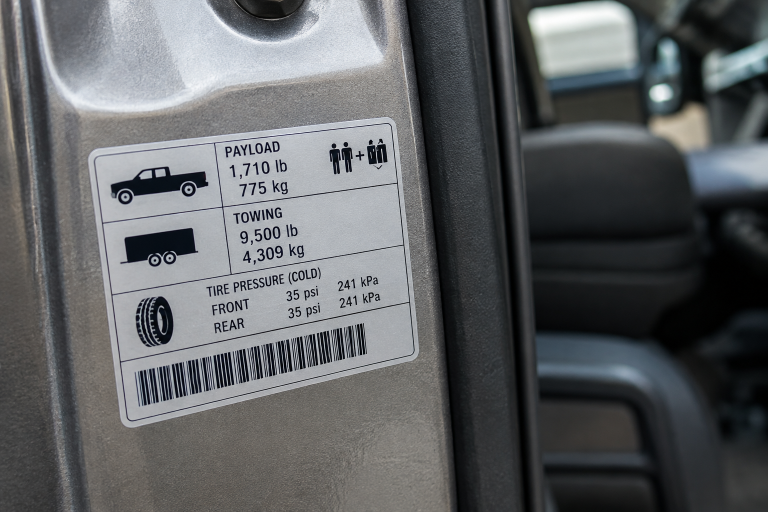
Payload is everything carried by the truck: occupants, tools, cargo, added accessories, and the portion of trailer weight pressing down on the hitch. Towing is the weight pulled behind it. Both numbers matter because a truck can have a strong tow rating while running out of payload after four passengers, coolers, toolboxes, and trailer tongue weight are added. Check the exact truck’s driver-door label, owner’s manual, and window sticker. Engine, cab size, bed length, drivetrain, axle ratio, wheels, and factory packages can change its ratings. Avoid relying on a model line’s maximum figure unless it applies to the specific configuration in front of you.
Estimate Your Loaded Trailer
- Find the trailer’s empty weight.
- Add water, fuel, equipment, food, camping gear, or job materials.
- Account for hitch weight as part of truck payload.
- Compare the loaded result with both truck ratings.
- Leave capacity in reserve instead of operating at the limit on every trip.
Match the Cab, Bed, and Powertrain to Your Routine
A regular cab can suit a work-first buyer who values bed space. An extended cab adds occasional rear seating. A crew cab is often the better choice for families, employees, and long Texas road trips. Short beds are easier to maneuver, while long beds are more useful for lumber, equipment, motorcycles, and bulky supplies. Gas engines are a familiar choice for broad everyday use. Diesel can make sense for frequent heavy towing or high-mileage work, though purchase and maintenance costs deserve close attention. Hybrid pickups may appeal to drivers who spend considerable time commuting. Electric trucks offer quiet operation and strong low-speed response, but charging access and towing-related range changes should be planned carefully, especially on long stretches between Texas destinations. Before comparing fuel costs, use the official EPA fuel-economy estimates as a baseline, then remember that load, speed, tires, weather, and trailer weight can change real-world results.
Choose the Right Drivetrain and Safety Equipment
Two-wheel drive can be a sensible fit for mostly paved-road use. Four-wheel drive is valuable for muddy job sites, ranch tracks, sand, steep grades, or slippery weather. It does not replace suitable tires, safe speeds, or correct trailer loading. It also adds cost, weight, and mechanical complexity. Safety deserves the same attention as capability. Look for clear camera views, trailer brake controls, blind-spot monitoring, rear cross-traffic alerts, parking assistance, and strong visibility around the hood and bed. Compare the exact model year and body style because equipment can vary. The vehicle safety ratings published by NHTSA can help shoppers review crash-test information and recalls before narrowing their list.
Separate Useful Features From Expensive Extras
Features that can genuinely support Texas truck ownership include bed lighting, tie-down points, lockable storage, integrated trailer brake controls, towing mirrors, power outlets, durable interior surfaces, and heated or ventilated seats for long drives. Features worth questioning include oversized wheels with costly replacement tires, appearance packages, lift kits that make bed access harder, and luxury equipment that does not serve a regular need.
Budget for Ownership, Not Just the Purchase
Include fuel or charging, insurance, financing, routine maintenance, tires, brakes, registration, trailer equipment, and likely resale value in the decision. A lower-priced truck may not remain the lower-cost choice if it uses more fuel, requires expensive tires, or lacks the capability needed for regular work.
Inspect and Test-Drive Before You Commit
For a used pickup, check vehicle history, title status, frame condition, corrosion, leaks, hitch wiring, bed damage, tire wear, and signs of suspension modifications. Test the climate controls, cameras, four-wheel-drive system, and driver-assistance features. An independent inspection is a sensible step before signing paperwork. During the test drive, spend time on city streets, highways, and tight parking areas. Check seat comfort, rear-seat access, braking feel, wind noise, turning radius, and sightlines. If towing is central to the purchase, ask for a demonstration of the hitch, trailer settings, camera views, and brake controller.
Final Texas Pickup Checklist
- Does it fit your usual parking spaces?
- Can it carry normal passengers, cargo, and hitch weight?
- Can it tow your trailer when fully loaded?
- Is the bed long enough for common jobs?
- Does the drivetrain suit your roads and work sites?
- Are fuel, service, insurance, and tire costs manageable?
- Has the exact truck been inspected and properly test-driven?
The best pickup for Texas life is not necessarily the largest or most expensive option. It is the one that safely handles your ordinary workload, remains comfortable for daily miles, and leaves room in the budget and capability rating for the unexpected.
Conclusion
Choosing the right pickup in Texas starts with understanding how you plan to use it every day. Consider your regular cargo, towing needs, passenger space, driving conditions, and parking limitations before focusing on appearance or extra features. Checking the exact truck’s payload and towing ratings is especially important, as these figures can vary depending on its engine, cab, bed, and drivetrain configuration. Buyers should also compare fuel or charging costs, insurance, maintenance, and other long-term ownership expenses. For used trucks, a vehicle history review, thorough inspection, and proper test drive can help identify potential issues before purchase. By prioritizing practical needs over advertised maximum capabilities, Texas drivers can find a pickup that offers the right balance of performance, comfort, safety, and value.


